

When Sleep Hygiene Isn’t Enough: What Insomnia Might Be Telling Us
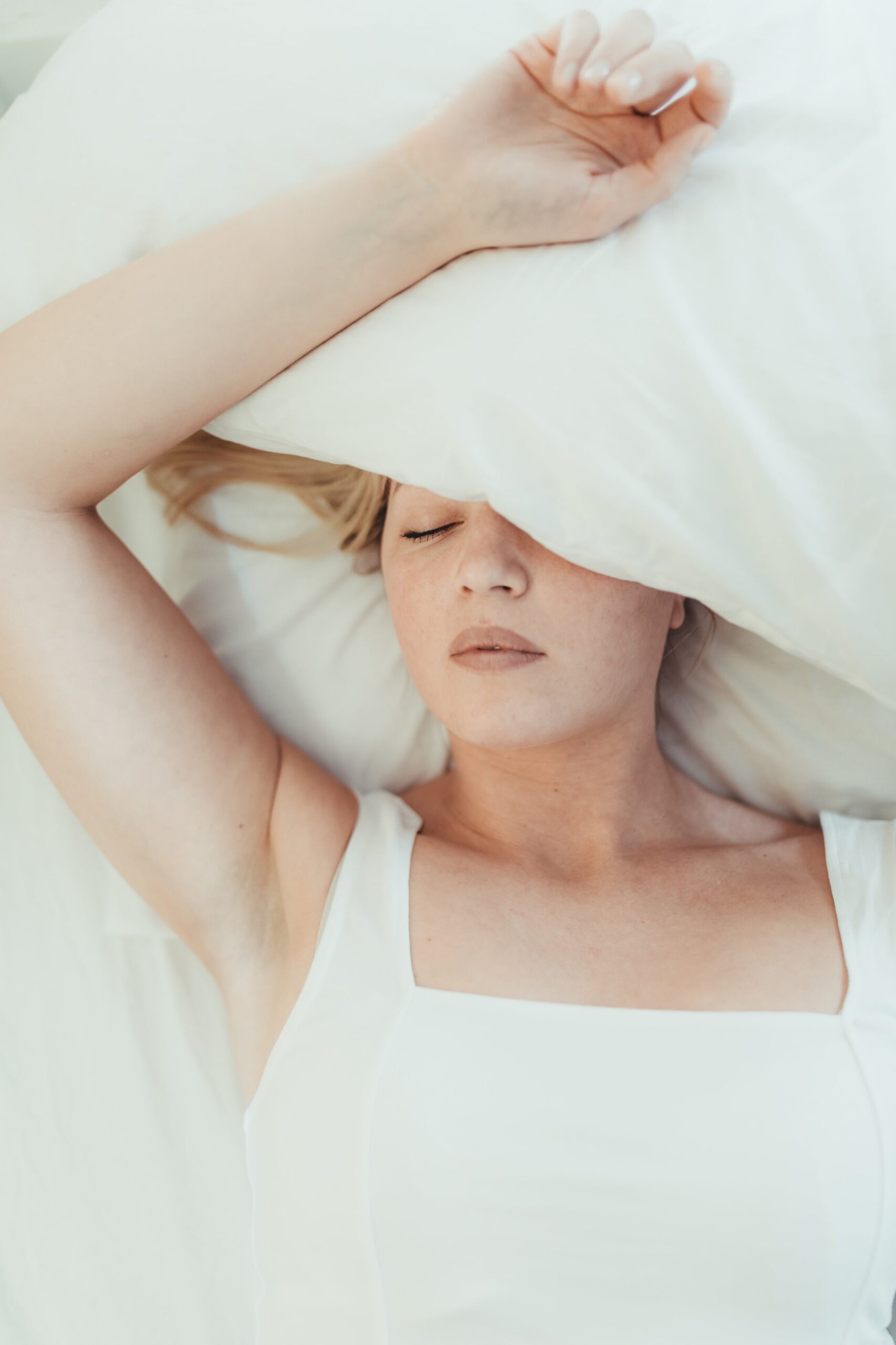
Sleep hygiene is often the first thing people are told to try when they can’t sleep.
Avoid caffeine. Put your phone away. Keep to a regular bedtime. Make the bedroom dark and cool.
For many people, this helps.
But for others, it doesn’t — and that can feel deeply confusing and invalidating. If you’ve “done everything right” and still lie awake at night, it can start to feel like your body is broken, or like you’re failing at something that should be automatic.
I want to offer a different way of thinking about this.
Sometimes, insomnia isn’t a failure of sleep habits — it’s about something deeper keeping the body awake.
Why Sleep Hygiene Has Limits
Sleep hygiene focuses on behaviours that support sleep, but it assumes the body is already in a state where sleep is possible.
Sleep is not just a habit. It’s a biological state that requires the nervous system to feel sufficiently safe, resourced, and regulated. It also depends on our hormones, melatonin to help us feel sleepy and cortisol to help us feel alert (side note: cortisol is not just the “stress hormone”).
When these biological systems aren’t working optimally, it becomes very difficult to override that with sleep habits alone. This is often why people say, “I know what I’m supposed to do, but my body just won’t cooperate.”
When Insomnia Begins with Stress
One of the most common pathways into insomnia starts with short-term stress — illness, grief, a relationship breakdown, work pressure, or a major life transition.
Initially, the poor sleep makes sense.
What often maintains the insomnia, though, are the understandable attempts to cope:
- Increasing caffeine to function during the day
- Spending more time in bed to “catch up”
- Clock-watching to monitor “If I fall asleep now I will get … hours of sleep”
- Worrying about sleep itself
If we have struggled to sleep for a while, we can also learn that trying to sleep = anxiety. This creates a paradox: The more we try to force sleep, the more anxious we become, and thus the less likely we are to actually fall asleep. If you think about it from an evolutionary perspective, this makes sense. Sleep is a state of profound vulnerability. If a predator were nearby and we were asleep, we wouldn’t be able to protect ourselves. To survive, the nervous system needed to stay awake and alert in the presence of threat. While the threats in our modern lives are far less likely to be lions, the nervous system still responds in much the same way.
Over time, sleep becomes effortful. The bed becomes associated with frustration and alertness rather than rest. And the sleep problems hang around, long after the initial stressor passes.
When insomnia becomes conditioned in this way, we need to treat more than just sleep habits. In these cases, Cognitive Behavioural Therapy for Insomnia (CBT-I) can be incredibly effective.
CBT-I is not only behavioural (i.e., not just sleep hygiene), it also targets the cognitive patterns that maintain insomnia, such as sleep-related anxiety, catastrophising, and rigid beliefs about sleep.
CBT-I is widely recognised as the gold-standard treatment for Insomnia Disorder* by major sleep organisations, including the American Academy of Sleep Medicine and the European Sleep Research Society.
I say this both professionally and personally.
I used to struggle with insomnia myself, and CBT-I was genuinely life-changing. I also use it frequently in my clinical practice and see excellent results for many clients.
For most people with Insomnia Disorder, CBT-I alone is enough — and when it works, it works well.
*Insomnia Disorder is defined as difficulties falling or staying asleep, or waking up too early, for at least three nights per week for a period of three months or longer. It also must be affecting your daily life (DSM-5).
Circadian Rhythm Mismatch
But not all insomnia follows this pattern. For some people, sleep difficulties reflect something different — a mismatch in their circadian rhythm. Circadian rhythm, sometimes referred to as our “body clock”, is our internal pacemaker, involving the nervous system and hormones, that orchestrates key biological functions and influences:
→ When you feel awake
→ When you feel sleepy
→ Body temperature
→ Hormone release
→ Alertness and performance
→ Metabolism and hunger
We all have an ideal time in which to fall asleep and wake up, as determined by our individual circadian rhythm. This tends to shift across the lifespan and is strongly influenced by light exposure and, to a lesser extent, the timing of food intake.
A helpful question to ask yourself is: “If you were stranded on an island, what time would you naturally fall asleep and wake up?”
Some people really are natural night owls (scientifically known as having a delayed sleep phase), such as most teenagers. If you have ever had a teenager, you will know the struggle of getting them to go to bed at a decent time or wake up in the morning for school. Teenagers often get a bad rap for using screens late into the evening, but their sleep patterns are also biologically shifted later. In many ways, asking a teenager to start school early is similar to asking an adult to start work at 4:00 am (no thanks!).
Disruptions in circadian rhythm are also a hallmark feature of neurodiversity (Autism and ADHD), mood disorders (including depression and Bipolar Disorder), menopause, and Shift Work Disorder. In these cases, insomnia may reflect a biological mismatch between an individual’s internal clock and external demands, rather than dysfunctional sleep behaviours alone.
It’s also important to understand that sleep is regulated not only by circadian rhythm (timing), but also by sleep pressure (the natural build-up of tiredness across the day). These two systems work together. If either timing or sleep pressure is off, falling asleep can become difficult.
For people with a circadian rhythm mismatch, treatment focuses on gently resetting the body clock, rather than trying to force sleep earlier. Light is the most powerful regulator of the circadian rhythm, which is why both morning light exposure and reducing light at night are so important.
Treatment may include:
- Carefully timed light exposure (often referred to as light therapy)
- Reducing light at night
- Optimising sleep pressure (for example, by managing naps)
- Nutritional interventions and meal timing
- Gradually adjusting sleep and wake times.
- In some cases, melatonin and other hormones or supplements may be used.
These approaches are most effective when they are individualised, consistent, and timed correctly.
The goal is simple: Work with your body, not against it.
But Sometimes Insomnia Is Still Communicating Something
Even then, the picture is still more complex. In some cases, insomnia reflects not just habits or sleep patterns, but broader physiological strain.
Insomnia can be a signal that the system is under ongoing load — whether from chronic stress, trauma, neurodiversity, illness, pain, hormonal shifts, nutrient deficiencies, or autonomic dysregulation. For example, in conditions like Postural Orthostatic Tachycardia Syndrome (POTS), Long Covid, and Myalgic Encephalomyelitis/Chronic Fatigue Syndrome, the autonomic nervous system can struggle to regulate basic state changes in the body, including the shift into sleep. In these cases, sleep is affected not because the mind is “too busy,” but because the body is having difficulty downshifting into rest.
Have you ever gone to the doctor knowing that something was wrong, only for it to be brushed aside as “just stress”?
When the autonomic nervous system is dysregulated, the normal nighttime transition doesn’t always happen smoothly. Instead of heart rate and blood pressure settling, the body may remain activated — or even become more activated — at night. This can show up as a racing heart when lying down, waking between 2–4am with a surge of adrenaline, feeling exhausted but wired, or experiencing light and unrefreshing sleep. Triggers like heat, alcohol, long days on your feet, or illness can make this pattern more noticeable.
For people with this pattern, insomnia isn’t primarily about sleep being “done wrong” or about poor sleep habits alone. It’s the body struggling to transition between states of alertness and rest.
At the same time, insomnia can also fluctuate with day-to-day load. Stress, emotional processing, physical exertion, and hormonal changes can temporarily push the nervous system beyond its current capacity — even in people with an underlying condition that is otherwise relatively stable.
In this sense, insomnia is less a separate problem and more a barometer of nervous system capacity at this moment.
Sometimes the issue isn’t that you’re doing sleep wrong. It’s that your system hasn’t been able to fully shift into a state where sleep is physiologically easy.
In clinical settings, autonomic nervous system dysregulation can unfortunately be dismissed as “just stress,” even when there are real physiological drivers that don’t always show up on standard tests. One way to test this yourself, is looking to see if your Heart Rate Variability (HRV) is low, compared to norms for your sex and age, before bedtime. You can get specific devices for this, otherwise, you get a wearable fitness device that tracts this.
Some ways to improve sleep in those with autonomic nervous system dysregulation include:
- Avoiding the typical sleep hygiene tip of having a warm shower before bed, as this often makes sleep more difficult for people with autonomic nervous system dysregulation.
- Wearing compression socks before bed.
- Sleeping with head slightly elevated, all you need is an extra pillow.
- Having extra sodium before dinner, if okayed by your doctor.
To be clear, these do not cure autonomic nervous system dysregulation, however, they can help with sleep in the meantime while you are treating the underlying cause.
Good sleep hygiene can still help reduce friction around sleep, and the relationship between insomnia and autonomic regulation is bidirectional. But if we don’t also ask why sleep was disrupted, we risk treating the surface while missing the context.
Why Individualised Care Matters
This is where a more individualised, integrative approach becomes essential.
For some people, insomnia is a conditioned pattern that can be unlearned.
For others, it’s a reflection of underlying circadian disruption.
And for some, it’s a sign of a system that hasn’t had the chance to recover.
Often, it’s a combination.
And this is why sleep — like so much of healthcare — works best when we stop asking “What’s the protocol?” and start asking “What’s going on for this person?”
With care,
Yasmin
Clinical Psychologist & Founder of Ataraxos
This article is for educational purposes only. This does not substitute for professional psychological or medical advice. Always speak with your medical team regarding diagnosis and treatment.


